
What a wonderful way to wrap up Bible Study.
For our final lesson of “Name Above All Names” the Mt. Island and Iron Station groups joined together for a time of study, worship, and fellowship. New friendships were formed and old ones renewed.
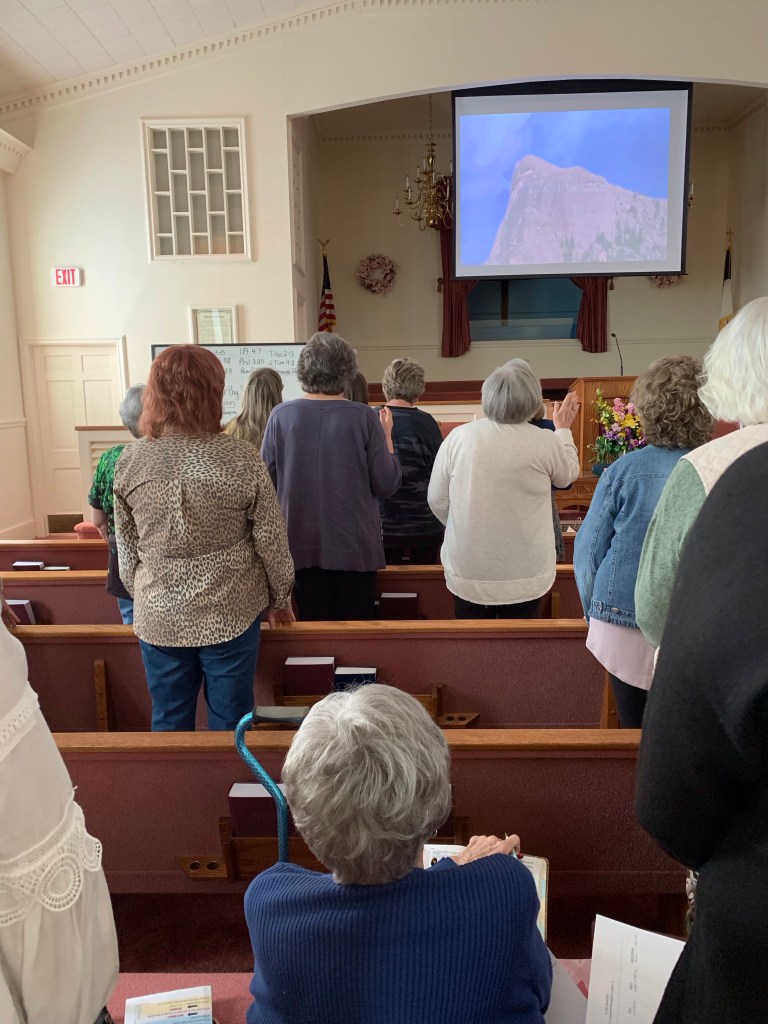
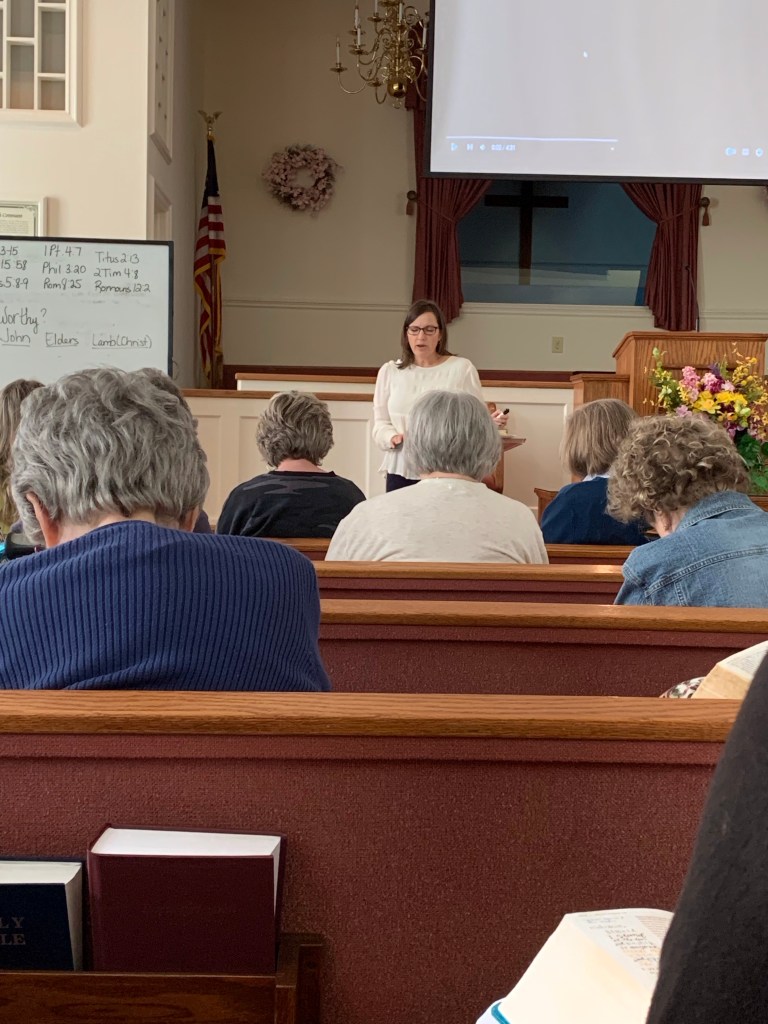
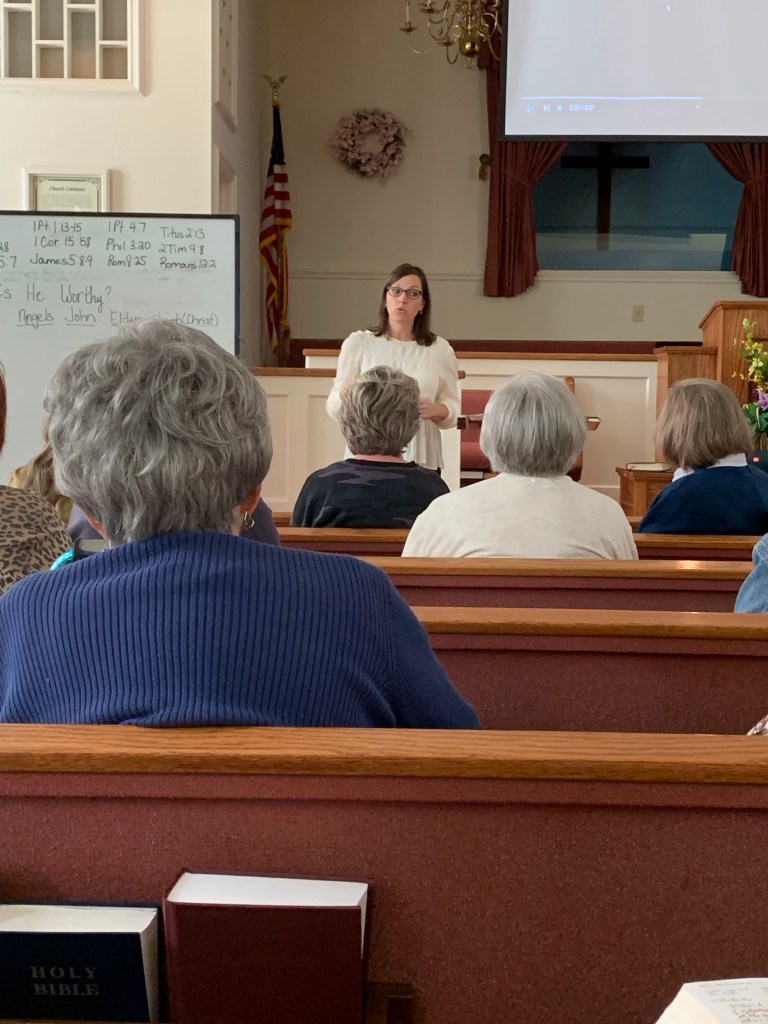


For our final lesson of “Name Above All Names” the Mt. Island and Iron Station groups joined together for a time of study, worship, and fellowship. New friendships were formed and old ones renewed.
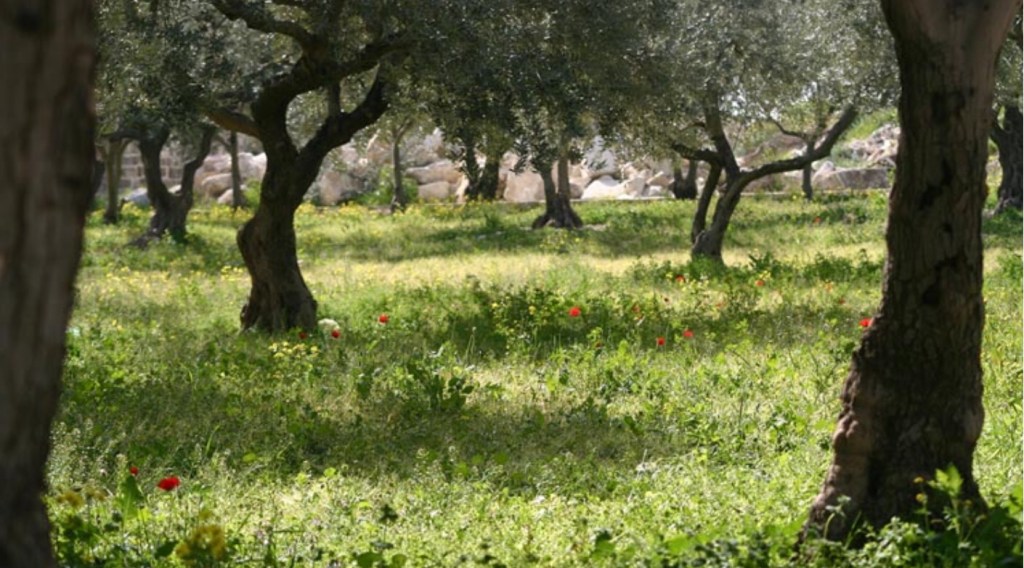
The Gospel writers all cover similar events from Jesus’ life, but each highlights particular details and aspects of Jesus’ identity. One of John’s intentions was to establish Jesus’ supremacy and victory over the very circumstances that were meant to degrade and humiliate Him. Consider Jesus’ arrest in the Garden of Gethsemane: He surrendered willingly but authoritatively, revealing His majesty as Savior of the world. Once, people had tried to force a king’s crown upon Jesus, and He had withdrawn because He knew that worldly kingship was not His destiny (John 6:15). Here, when the soldiers came to force a cross upon Him, He knew all that would unfold. They were surely expecting to have to search far and wide for this notorious Galilean carpenter. Instead, here He was, willingly surrendering, with a majesty in His voice, a look in His eye, and a bearing about His person that contributed to the magnitude of the moment. No wonder they “drew back and fell to the ground.”
When Jesus surrendered Himself to those who would treat Him as a blasphemer and a criminal, He did not deny who He was. In fact, He used language that communicated His divine identity and authority. Jesus used the phrase “I am” not only to tell the soldiers He was Jesus of Nazareth but also to identify Himself as the one who had appeared to Moses at the burning bush (Exodus 3:14). This was the same phrase that had, months earlier, seen Him nearly stoned (John 8:58-59), for it was a clear claim to be the self-existent, living God.
Now here is this God, stepping forward to stop His friends resisting and allow His enemies to kill Him. Why? As Christ came forward in the garden, He was not only protecting His disciples but also providing for His people. He stepped forth as the substitute for sinful humans, as the fulfillment of all that had long been anticipated. He knew exactly what He stepped toward: “Christ also suffered once for sins, the righteous for the unrighteous, that he might bring us to God” (1 Peter 3:18).
In His combination of willing surrender and divine authority Christ took the next step toward the cross, where His sacrifice won our salvation. He did not run from the cross but rather walked resolutely toward it. And He did that for you.
It is a thing most wonderful,
Almost too wonderful to be,
That God’s own Son should come from heaven,
And die to save a child like me.[1]
Devotional material is taken from Truth For Life Daily Devotional by Alistair Begg. Copyright © 2021, The Good Book Company, thegoodbook.com. Used by Truth For Life with written permission.
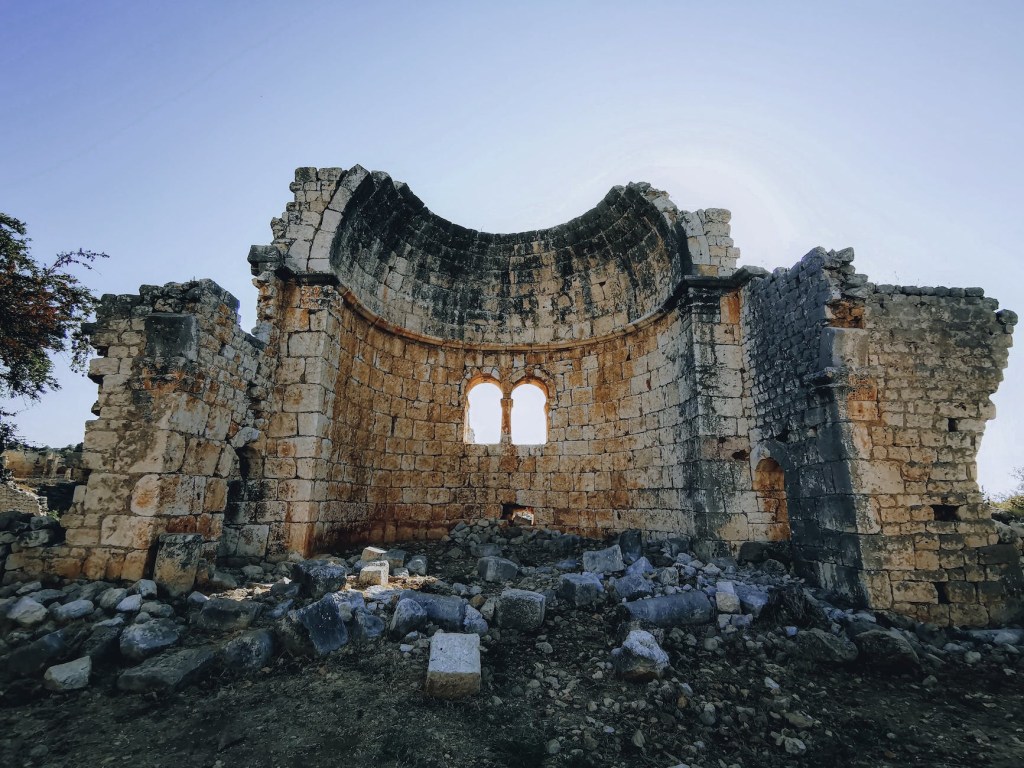
“By faith the walls of Jericho fell down, after they had been encircled for seven days” (Heb. 11:30).
Faith is the key to spiritual conquest.
Forty years had lapsed since the Israelites refused to enter the Promised Land. That unbelieving generation had perished in the wilderness. Now Joshua was leading a new generation into the land. The first obstacle they faced was Jericho—a well- fortified city that was near the mouth of the Jordan River.
Some city walls of that day were wide enough at the top to allow two chariots to ride side-by-side. That was probably true of Jericho because of its strategic location. That, coupled with the caliber of its army, made the city virtually impregnable— especially to unsophisticated Israelites, who lacked military training.
But what is impossible for man is easy for God. And the stage was set for Him to demonstrate His power and for the Israelites to demonstrate their faith and humility.
One can only imagine how embarrassed the Hebrew people felt as they marched around Jericho once a day for six days. That certainly is not your typical military strategy. But on the seventh day, after marching around the city seven times with the priests blowing their rams’ horns, the priests gave one final blast, the people all shouted out loud, and the walls of the city collapsed (Josh. 6:20). Faith had reduced a formidable obstacle to a crumbled ruin.
Can you identify some spiritual obstacles you’ve faced recently? How did you handle them? You’ll always have them to deal with in your Christian walk, but don’t fret. See them as opportunities to exercise faith and see God’s power on display in your life. Continue to trust the Lord and demonstrate your faith by courageously doing what He has called you to do.
Suggestions for Prayer
Ask God to help you humbly trust in God’s power when you face spiritual conflicts.
For Further Study
Read about the conquest of Jericho in Joshua 6:1-21. Note each occasion where the people obeyed one of Joshua’s commands without hesitation.
From Drawing Near by John MacArthur Copyright © 1993. Used by permission of Crossway Books, a division of Good News Publishers, Wheaton, IL 60187

There’s not a friend like the lowly Jesus,
No, not one! No, not one!
None else could heal all our soul’s diseases,
No, not one! No, not one!
(Refrain)
No friend like Him is so high and holy,
No, not one! No, not one!
And yet no friend is so meek and lowly,
No, not one! No, not one!
(Refrain)
There’s not an hour that He is not near us,
No, not one! No, not one!
No night so dark but His love can cheer us,
No, not one! No, not one!
(Refrain)
Did ever saint find this Friend forsake him?
No, not one! No, not one!
Or sinner find that He would not take him?
No, not one! No, not one!
(Refrain)
Was e’er a gift like the Savior given?
No, not one! No, not one!
Will He refuse us a home in heaven?
No, not one! No, not one!
(Refrain)
Refrain:
Jesus knows all about our struggles,
He will guide till the day is done;
There’s not a friend like the lowly Jesus,
No, not one! No, not one!
 Heart2Heart Women